Objectives
Fund scope
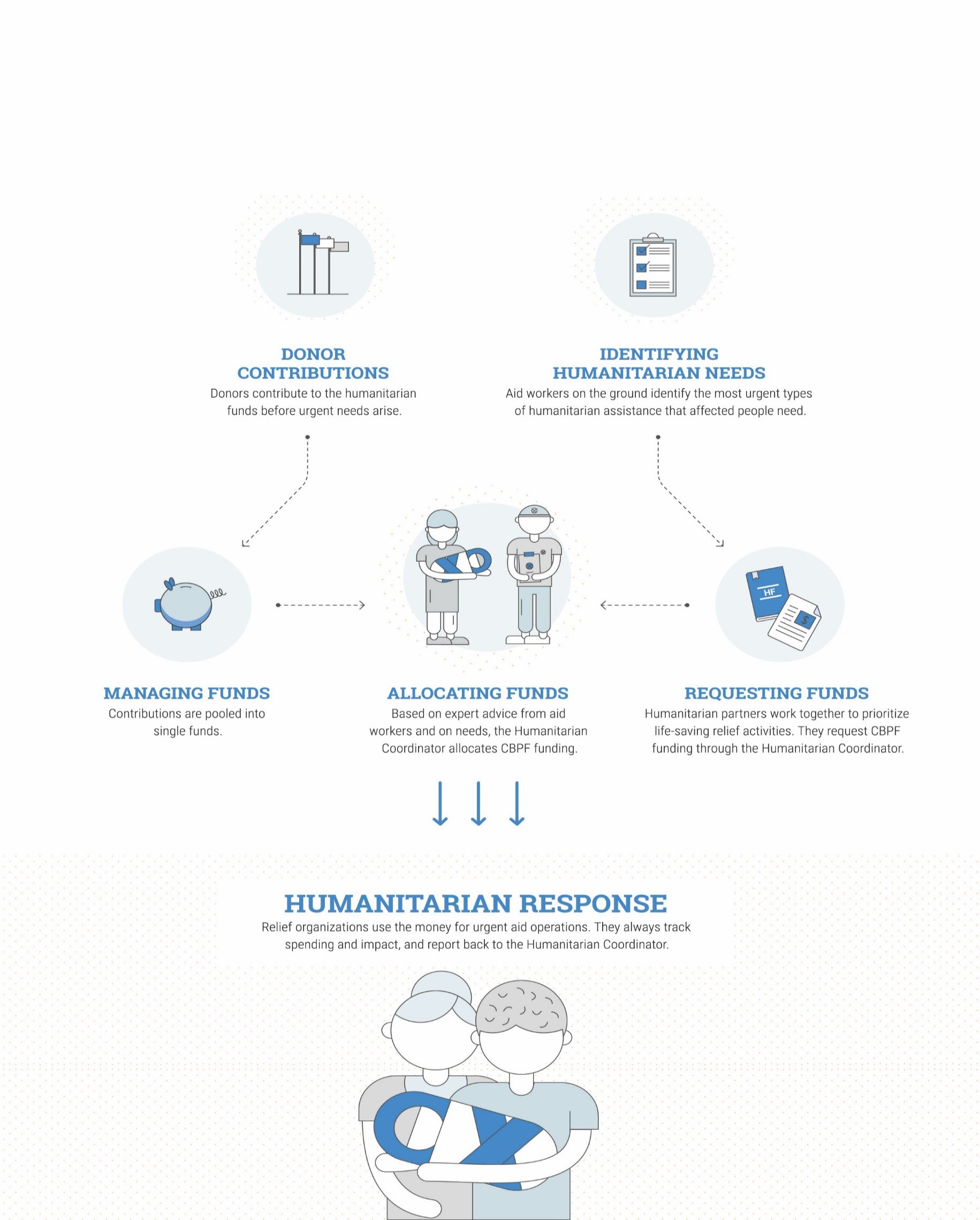
Established in 2006, the Democratic Republic of Congo (DRC) Humanitarian Fund was designed to address accountability and predictability issues in financing humanitarian emergencies. Since that time the Fund has evolved into a country-based pooled fund managed by the Humanitarian Coordinator. The Fund supports the timely allocation of donor resources for the most urgent humanitarian needs in the DRC.
Supporting activities prioritized as the most urgent and strategic, the Fund closes existing humanitarian gaps and meets the needs of vulnerable communities. In close alignment with the DRC Humanitarian Response Plan, it funds interventions that offer immediate solutions to sudden emergencies or rapidly deteriorating conditions across the country.
Projects run between three to 24 months and are implemented by a committed group of partners that include national and international NGOs, and United Nations organizations.
Strategic and results framework
The DRC Humanitarian Fund channels resources to partners for humanitarian activities prioritized as urgent and strategic. Also available are grants for national and international NGOs, and United Nations organizations in DRC that are well-placed to deliver timely and integrated activities in accordance with broader humanitarian principles.
Pooled funds are reserved for activities that cover one or more of 11 clusters and crosscutting issues—all based on Humanitarian Action Plan clusters:
- Coordination
- Early recovery
- Education
- Food security
- Health
- Logistics
- Multi-sector (refugees)
- Nutrition
- Protection
- Shelter and non-food items
- Water, sanitation, and hygiene
Together, the Humanitarian Action Plan and DRC Humanitarian Fund advance humanitarian aid reforms by strengthening response capacity through clusters; providing predictable and timely resources to partners rolling-out emergency activities; improving coordination at the field and national levels, and endorsing Good Humanitarian Donorship principles that combine needs-based approaches with flexible, timely, and predictable funding.
NGO eligibility is determined following a rigorous capacity assessment to ensure an organization has the necessary structures and capacities in place to meet robust accountability standards and efficiently implement humanitarian activities.
There are two mechanisms for allocating funds:
- Standard allocations comprise the bulk of resources for the highest priority humanitarian needs of up to 24 months.
- Reserve allocations are used to tackle sudden emergencies or the deterioration of existing crises. Under the reserve umbrella funding streams are broken down into ‘emergency’ and ‘first emergency’ categories.







 > $55M
  $55M - $25M
 $25M - $5M
 < $5M
< $5M